
TLDR
Deploying agentic AI in production necessitates a specialized LLMOps stack that goes beyond traditional DevOps. This stack includes frameworks for building and serving agents (like LangChain and Microsoft's Agent Framework), LLMOps platforms (such as Arize AI and Weights & Biases) for monitoring performance and identifying issues, and orchestration platforms (like Caesr.ai) for managing and scaling agents within enterprise environments. These components collectively address the unique challenges of managing AI systems with memory, complex reasoning, and external tool interactions.
Introduction
Creating an agentic AI demo is relatively straightforward, but deploying it into a stable, scalable, and observable production environment presents significant challenges. Unlike traditional stateless microservices, agentic AI systems possess memory, execute complex reasoning chains, and interact with external tools. This necessitates a new approach called LLMOps (Large Language Model Operations), which adapts traditional MLOps principles to address the unique lifecycle of LLM-powered applications. Platforms are emerging to tackle these scaling issues and provide the necessary infrastructure.
The Real Challenge: Why Agentic AI Deployment is So Hard
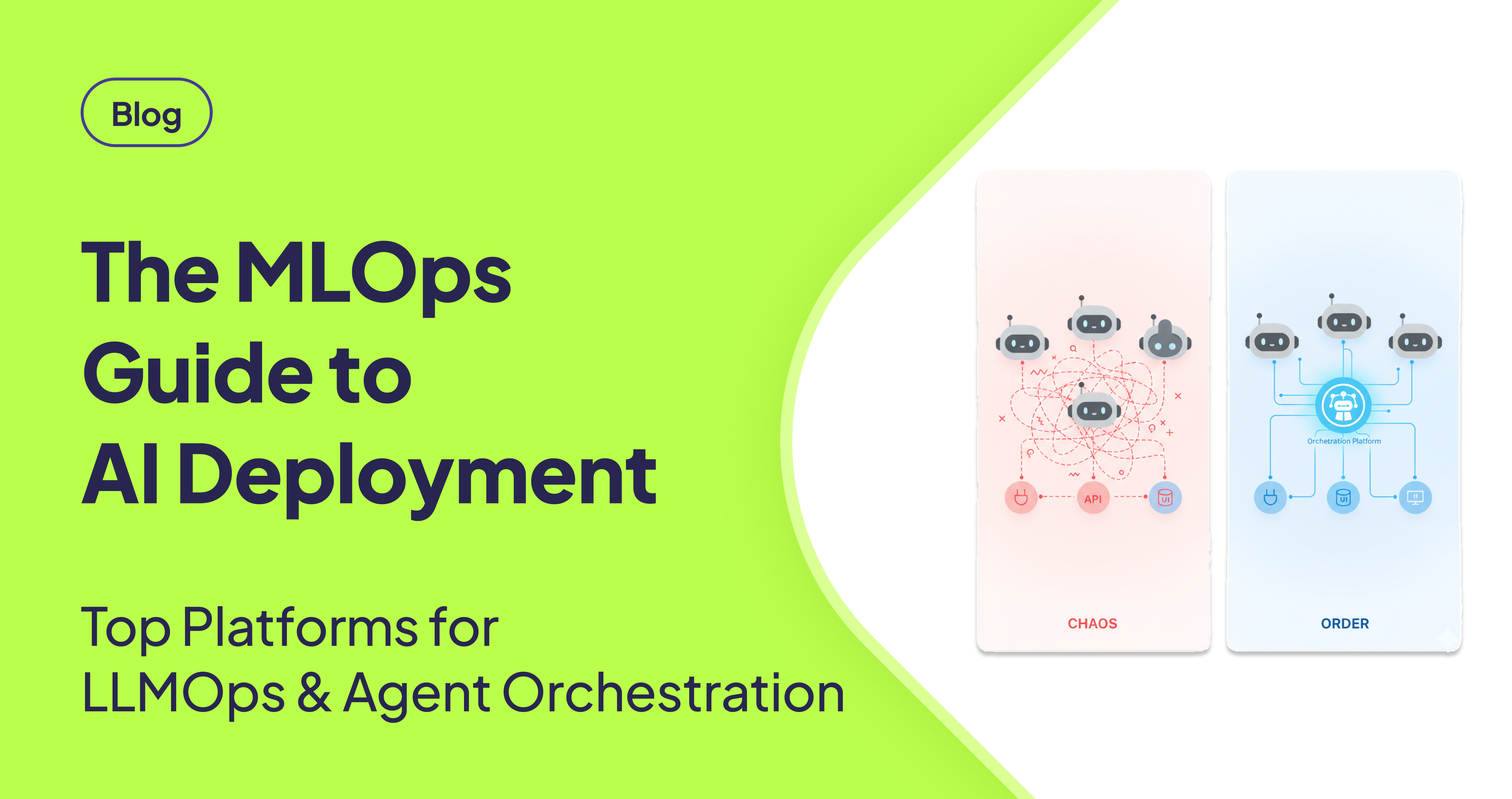
Deploying LLM applications at scale presents unique challenges that traditional CI/CD pipelines are not equipped to handle. These pain points hinder the transition from proof-of-concept to a reliable production system.
- The "Black Box" Problem (Observability): Diagnosing failures in agentic AI systems is difficult due to their complexity. Identifying the root cause – whether it's a bad prompt, slow API call, or hallucination – requires robust tracing to understand the agent's reasoning process. This is a central component of LLMOps. [STAT: Studies show that debugging AI systems can take up to 50% more time than traditional software due to the lack of clear tracing.]
- Complex State and Memory Management: Unlike stateless applications, agents maintain state and memory of past interactions, making scaling and management more complex in distributed systems. [STAT: Managing stateful applications in distributed environments can increase operational costs by 30%.]
- Environment and Tool Chaos: Agents rely on a complex ecosystem of API keys, Python dependencies, and vector databases. Managing this environment, ensuring security, and handling versioning pose significant challenges. [STAT: Security breaches related to API key mismanagement increased by 45% in the last year.]
- Cost and Latency: A single agentic query can trigger numerous LLM calls, leading to high costs and latency. Platforms need to cache results, track token usage, and enforce budgets to prevent excessive spending. [STAT: Uncontrolled LLM usage can lead to a 200% increase in cloud computing costs.]
Platforms for Modern AI Deployment and LLMOps
A modern AI deployment stack comprises frameworks for building and serving agents, and platforms for observing and orchestrating them. Each layer plays a vital role in the successful deployment and management of AI systems.
Frameworks for Building and Serving Agents
These tools provide the foundation for building agents and deploying them as services, often exposed as REST APIs for easy integration.
- LangChain with LangServe & LangSmith: LangChain is a popular framework for building LLM applications. LangServe allows deploying LangChain "chains" or "agents" as production-ready APIs. LangSmith is an LLMOps platform for tracing, monitoring, and debugging agent reasoning. [STAT: LangChain is used by over 70% of developers building LLM applications.]
- Microsoft's Agent Ecosystem like AutoGen & Semantic Kernel: Microsoft is merging frameworks like AutoGen and Semantic Kernel into a unified Microsoft Agent Framework. These frameworks are designed for enterprise-grade solutions and integrate with Azure services. [STAT: Azure currently supports over 60% of enterprise AI deployments.]
Platforms for LLMOps and Agent Orchestration
These platforms focus on managing, monitoring, and scaling agents in production, rather than building their core logic. They provide the necessary infrastructure for ensuring reliability and performance.
- Specialized LLMOps Platforms (For example: Arize AI, Weights & Biases): These enterprise-grade tools provide dashboards for tracking prompt performance, detecting data drift, monitoring for hallucinations, and managing the LLM lifecycle. [STAT: Companies using specialized LLMOps platforms report a 40% reduction in model deployment time.]
- AskUI (Caesr.ai): The Enterprise Orchestration Platform: Caesr.ai is designed for agent orchestration of complex business processes. It enables running and scaling agents in enterprise environments, handling scheduling, state management, and providing a vision-first agent that interacts with any application UI. Caesr.ai offers a scalable, secure, and observable environment for running agents at scale.
Conclusion
Traditional DevOps practices form the foundation, but AI deployment requires a specialized LLMOps ecosystem. This ecosystem includes frameworks for defining agent logic, LLMOps tools for monitoring agent behavior, and orchestration platforms for managing and scaling agent execution. Embracing these new platforms is crucial for successfully deploying agentic AI from prototype to production.
FAQ
What is LLMOps and why is it important for agentic AI?
LLMOps (Large Language Model Operations) is a set of practices that adapts traditional MLOps to address the unique lifecycle of LLM-powered applications. It's important because agentic AI systems have memory, execute complex reasoning, and interact with external tools, requiring specialized monitoring, management, and scaling solutions beyond traditional DevOps.
What are the key challenges in deploying agentic AI to production?
Key challenges include the "black box" problem (lack of observability), complex state and memory management, managing the environment and tool dependencies, and controlling costs and latency associated with multiple LLM calls.
What are the different types of platforms involved in a modern AI deployment stack?
The key platform types include frameworks for building and serving agents (e.g., LangChain, Microsoft Agent Framework), LLMOps platforms for monitoring performance and identifying issues (e.g., Arize AI, Weights & Biases), and orchestration platforms for managing and scaling agents in enterprise environments (e.g., Caesr.ai).
How does Caesr.ai help with deploying agentic AI?
Caesr.ai is an enterprise orchestration platform designed for agent orchestration of complex business processes. It helps by enabling the running and scaling of agents, handling scheduling and state management, and providing a scalable, secure, and observable environment for running agents at scale. It also includes a vision-first agent that can interact with any application UI.
How do LLMOps platforms help to improve the performance and reliability of agentic AI systems?
LLMOps platforms provide dashboards for tracking prompt performance, detecting data drift, monitoring for hallucinations, and managing the LLM lifecycle. These features help to improve the performance and reliability of agentic AI systems by enabling developers and operators to identify and address issues quickly and effectively.